Showing posts with label Elections 2014. Show all posts

Sunday, June 21, 2015

Underwhelmed by one year of BJP’s government

It has been over a year since BJP formed its first full majority government.  And if one were to step back to look into this one year, one is underwhelmed by the performance of the government.  Now before I am branded as another die-hard critic who sees only the nefarious and amoral in all that the new government has done. Let me clarify one thing, I am and continue to be one of the biggest supporter of Narendra Modi. As founding member of an organization that played a vital part in ensuring Narendra Modi’s victory, I along with others have toiled hard to convince people to support Narendra Modi. Infact, it gives me pride to say that, we started campaigning for Modi in June 2013, when even the BJP had not even appointed him as the campaign chief in the Goa conference and where the established opinion was that the likelihood of Narendra Modi becoming PM candidate was as unlikely as India winning the next Football world cup. Further even though we spent our time and money in galvanizing across 2 states, hundreds of towns and thousands of villages, we at the culmination of our goal dissolved the very organization and got back to our normal lives. Hence it is the voice of someone who has staked a lot on Narendra Modi that I claim that I am underwhelmed.

Also neither I am those who had unrealistic expectations from this government. I understand how economics work and Rome was never built in a day. I am not demanding my Bullet trains today as I know that it take’s years to build one nor am I asking India to become a developed nation in the next five years. I clearly understand that things take time and effort to succeed. Therefore the question arises is why do I feel underwhelmed by the government’s performance. Given that it is a true fact that government has minimized and eradicated corruption at the highest levels, has given rigour to foreign ministry languishing since the days of Indira Gandhi. The government has done many things right from modernization and importance given to defence sector to socio-economic policies like the insurance schemes and others. The Swach Bharat Abhinayan is truly commendable and if it succeeds it would be truly transformational.

No, it is not because that I don’t see the positive developments in the last one year nor is it because that I doubt their intentions that I feel underwhelmed. No, not at all. The main reason, I feel underwhelmed is the progress made on the economic and development front. I see clear lack of rigour and drive towards development, economic reform and rejuvenation. My main grouse, when Narendra Modi set us a target of 272+, the so called “intellectual” opinion of this country sniggered at our unrealistic and quixotic goal. Even the staunchest of Narendra Modi’s supporter never believed we will win more than 272 seats to become the first non congress party to win majority on its own. We succeeded in achieving the same precisely because we set ourselves hard and brutal targets and strove with determination, single-minded focus on achieving it and nothing distracted us on our path to victory. Today, I see a lack of similar sentiment in the way government is approaching matters, from GST to land ordinance bill, from Labour reforms to relegating useless laws and regulations.

What the government has done in the last one years on the reform and development agenda has not be unique or special. It did not a Narendra Modi to do it and any sensible government could have done the same. If BJP had in its wisdom chosen Sushma Swaraj, Arun Jaitley or any other so called secularly acceptable PM candidate, BJP would still have likely formed the next government in a coalition of myriad partners. This coalition government of Arun Jaitley would have easily achieved what this government has achieved in the last one year. Then the question arises is why has the government till now done what any mediocre Arun Jaitley government could have done with coalition government. Why did hundreds of thousands of youth organize themselves spend time and money in electing Narendra Modi has prime minister with a full majority if all that could have been achieved would have been achieved without us doing so. When I look back, I remember the volunteers with whom I interacted who were ready to spend even their meagre earnings to campaign for Narendra Modi and I feel disheartened that all their efforts have not mattered as we ended up appointing a Jaitley government rather than Narendra Modi led one.

Hence I urge our Prime Minister to relook at the last one year critically and understand the tremendous effort of the volunteers who are all looking for the same single minded determination, focus towards achieving unrealistic goals. To display drive and rigour in achieving necessary actions to reform and deregulate the mess created by the 65 years of misrule and set us up for double digit growth for the next two decades. Enough of testing waters solutions, half-hearted attempts, misaligned thrusts and working on “consensus solutions”. I would like to end my case by saying
 “Bas Karo Jaitley Sarkar ab Chahiye Modi Sarkar “

Monday, March 18, 2013

Why we should Vote??

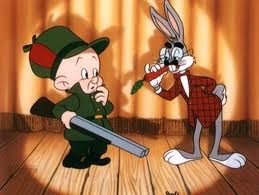
In the present context, we see doom and gloom everywhere around us. A sense of pessimism pervades through the entire nation. From “we are the next superpower” mindset we have now entered into a state of helplessness and weakness. No wonder everyone seems to make a joke of us. From a country that regularly elects clowns, to a tiny country that is expected to entirely submerge in due course of time with global warming, no one takes us seriously enough. Pakistan regularly humiliates us and the entire experience with Pakistan reminds me of Elmer Fudd’s attempts in catching Bugs Bunny (No rewards for guessing who is what here). But we continue to prod on, always thinking that it could have been worse.

Anyways why the hell should we worry about how India is treated by other nations? As long as we are happy and content in our lives, we really don’t give a damn about such things. Only a few lunatic nationalists cry hoarse over such incidents, after all we are all more worried about our next trip to Europe and what if deterioration of relations results in us not getting tourist visas (Apparently, 9L tourists visited Europe from India last year)
Coming to domestic front, the economy seems to huffing and puffing and chugging along at a meagerly Nehru growth rate of 5%. A key indicator of future growth prospects, capital goods output continues to fall. Some reports even suggest that we may have to face sluggish growth rate till the end of the decade.  Infrastructure formation is crawling at speed faster than ludicrous speed. As this report clearly indicates UPA government’s mismanagement is the key factor for the slowdown in infrastructure formation. Our current account deficit is hovering at a dangerous level of 5.3% as compared to a surplus of 1-2% in the early 2000s. Given that most of this deficit is being financed by highly liquid FII inflows which have a high tendency to bolt off with just a whiff of worsening in the situation. The country is at a perilous stage. Imagine the plight of the country if due to global shock, FII’s were to leave in droves, India will face a Balance of payments crisis of unprecedented nature. To add to all of these, we have numerous corruption scams that seem to prop everyday whose reach and scale can beat any of the recent internet sensations. All these should worry any common citizen (I mean highly educated middle and upper class commoners), right??.We could expect angry citizens (??) to vent their fury come Election Day. We can expect historic results from the next elections just like in those European nations that we so desperately aspire to be. Right??


But hey, how do these things concern us. GDP growth, infrastructure, current account deficits, all these are things that never really matters in our lives. Let the politicians and economists figure out what to do. Talking about roads, we really don’t care, since we mostly travel by air and if we do travel, we use our SUVs. In fact these roads are awesome to try out the off-roading capabilities of our new cars. Our apartments have UPSs and generators, so we never bother whether there is power or not. Mineral water is easily available, so why worry about water supply. We thrive irrespective of any infrastructure formations.  Corruption, well... it has always been there, besides giving some money for getting work done quicker isn’t so bad. So why should we go and vote on Election Day and ruin a good holiday. When things are going so fine for us, why waste our time standing in long queues with other commoners. Anyways our votes really don’t matter. We never seem to get the kind of people we like to be elected; in fact they seem not to even bother standing. The rest of the people who stand are anyways uneducated slum dwellers who cannot even speak one sentence in English. So seriously who really cares about voting. Politics is so lame and such a waste of time. We have our beautiful lives to look after, why should destroy our carefully built world by thinking/ involving ourselves in the matters that are so repulsive.

This is where most of us are wrong. All of the above things matter to us and at more fundamental level that we never think. Infrastructures, growth, GDP, current account deficits, corruption, etc all influence one elementary factor that affects most of our lives. This factor is nothing but our jobs, our careers and its growth. Unless we are public sector employees, rest of us are clearly dependent on our jobs, bonuses for all the luxuries that we afford in our lives. And all the above factors can really upset the delicate balance that we have carefully built in our lives. Why??
Because when the economy does badly, most companies also do. When your company does badly, it affects your career.  Your bonuses have shrunken in the last couple of years faster than matter and time at the edge of a black hole. Promotions have become scarcer than Sir Ravindra Jadeja’s centuries. All those neat little calculations on paying your EMI’s for your cars, apartments and other things have gone for a toss.  Even the carefully built protective bubble around your life has been penetrated by the obnoxious external doom and gloom. For it is the simple rule of mathematics, that when the whole is divided, so are the constituents of the whole. The weights might be different but division will occur irrespective of your efforts to preserve status quo.
Hence it is my humble request to all my friends to stop being cynical and pessimistic and start thinking positively on how to bring about change. To stop living in carefully constructed “dream” lives and start interacting and responding to the external environment.  To stop believing in the non sense of two different worlds of “India” and “Bharat” and start understanding that, we all are leaving in the same country. And finally to stop treating every Election Day as an holiday and start thinking seriously about voting the right candidates. Right candidates doesn’t mean candidates who act and speak like you and who have similar qualifications but candidates who speak the right thing irrespective of his background or party. For every vote is crucial, and it is not crucial because it will change the destiny of the nation, or dramatically improve our fortunes, makes us a superpower, eradicate poverty, stop crimes and corruptions completely but for the simple fact that you’re entirely constructed structured lives depend on it. For without our jobs, bonuses and promotions, we cannot have our beautiful apartments, sporty cars and holidays to exotic locations.

So please register yourself and cast your vote in the next election (to any candidate!!!)


Monday, January 28, 2013

How NREGA won UPA its Second Term

Now ever since UPA won the 2009 elections, A lot of political commentators have speculated on the possible reasons that would have persuaded the electorate to vote them back to power. Everything from Rahul’s new paradigm in politics to matured leadership of Manmohan Singh was perceived to be the main factor behind UPA’s re-election in 2009.But one of the major contributing factor for congress victory that most political observers agreed was NREGA scheme.
In this short post, I try to rationally analyze whether NREGA indeed help UPA in the pro-incumbency wave seen in the election. 2009 national elections was in-fact not a single issue based election and multiple issues interplayed at both regional and local level to effect the outcome of the election. Hence it is very difficult to single out an issue and extract the impact of that issue on the final voting preference of the electorate. Hence it would be very difficult to analyze the impact of NREGA scheme on 2009 elections at India level analytically. Therefore I have tried to take a sample state which ideally would be bereft of any local or regional issue during the 2009 elections.  
Starting from the 28 states in India, we can easily rule out the smaller states of Goa, North East, since electorally they are relatively insignificant. Ideally we would want a state which is a bipolar contest between BJP and Congress (the two national parties, since these would relatively have lesser prominence to local issues). Among the states where there is a straight contest between BJP and congress, Madhya Pradesh stands out. In 2008 assembly elections BJP had just won a 2nd term to rule the state with near 2/3 majority 143 out of 230 seats.[1] So BJP was expected to win a majority of the parliamentary seats in 2009.[2] Most opinion and exit polls predicted a BJP sweep of around 20-25 seats out of the 29 seats in total. But surprisingly Congress managed to win 12 seats with BJP winning 16 seats and BSP the remaining seat.[3] This was surprising and almost a matched performance by the Congress especially with the fact that the same party had got a thrashing in the assembly elections held just 6 months back.[1] In the case of the other states where elections were held along with that of Madhya Pradesh in 2008, the results in 2009 parliamentary elections broadly followed the assembly elections results. In Delhi and Rajasthan Congress swept the states with 7/7 and 20/25 seats respectively and in Chhattisgarh BJP won resoundingly 10/11 seats in the state[4]. Hence when all these states are considered, Madhya Pradesh clearly stands out.
So how was Congress able to win so many seats in Madhya Pradesh? In 2009 elections there were not many dominant local issues that dominated the discussion. Hence it is safe to assume that National issues with local bearings had major role to play. Now the question arises, which ones? Was it the matured leadership of the PM that enabled to the voters to trust Congress or was it Rahul’s magic?.
So when we deep dive into the 2009 results, we can clearly see a pattern that when taken in context explains the underlying factor behind congress better than expected performance.  I was able to procure assembly level voting shares for each of the party in 2009 elections from the election commissioner website. [5] I correlated this with the no of blocks in each of the assembly segments designated as Rural or urban by the election commission. By broadly using the share of polling booths classified as Rural vs. Urban and with an assumption that each of the polling booth would cater to nearly equal number of voting population. I was able to approximate the share of Rural and Urban electoral population in each of the assembly segment. Refer the link below for reference.
When the assembly seat population characteristics are correlated with the voting pattern in 2009 elections, a clear trend emerges. Rural segments have voted fairly evenly between Congress and BJP while the urban segments have in majority of the cases voted decisively for the BJP.
The below table illustrates the voting pattern that emerges
Rural Share
INC
BJP
Total Votes cast
Weights
No of assembly segments
BJP
INC
BSP
95-100%
40.1%
39.7%
5551853
29%
63
27
32
4
90-95%
40.4%
41.9%
4303994
22%
52
27
23
2
80-90%
39.8%
43.9%
3891963
20%
47
25
21
1
70-80%
36.8%
46.4%
1624213
8%
20
11
9
0
50-70%
42.7%
47.8%
1378412
7%
16
9
7
0
25-50%
43.3%
43.6%
924128
5%
11
8
3
0
0-25%
40.1%
51.9%
1796309
9%
21
16
5
0
Total
40.2%
43.5%
19470872
100%
230
123
100
7


As we can see from the above table, Congress has in fact performed better than BJP in predominantly rural seats (95-100% share of rural polling booths) with a total vote share of 40.1% against 39.7% of the BJP. In terms of assembly segments, Congress had leads in 32 out of a total of 63 seats with predominance of rural population as against 27 for the BJP. As we go further into urbanized assembly segments we find BJP’s vote share difference vis a vis Congress improving and eventually dominating. At a broad level the Voting share of Congress and BJP in seats with more than 70% rural population stands at ~40% and ~42% respectively. At an assembly seat level this translates into 85 and 90 seats in which the respective parties had leads out of 182 seats in this category. In seats with significant urban population (30-50% of Urban polling booth share), we can clearly see BJP having a significant advantage with ~48% vote share as against ~43% of the Congress. In terms of assembly segments BJP lead in 16 seats as against 9 seats by the Congress out of a total of 25 seats. And finally in Urban majority seats, BJP is the clear winner with whopping 8% lead in vote share with ~49% as against voter share of ~41% for the congress. BJP had leads in 24 of the 32 assembly segments vis a vis 8 for the congress.


Clearly the major reason for the better than expected of the Congress is due to its on par performance in the rural segments of the Madhya Pradesh state. It is here that NREGA comes into picture. NREGA has been reported to have been successfully implemented in Madhya Pradesh. NREGA is rural focused scheme and benefits only the rural population by guaranteeing 100 days of work for eligible adults. The successful implementation would have resulted in the creation of enormous goodwill among its beneficiaries which could have resulted in proportionate impact on the voting trends of the beneficiaries in 2009 elections. We can clearly state that NREGA indeed had a positive impact on the electoral prospect of the UPA government. The on par performance of UPA in rural segments can only be attributed to the NREGA scheme and nothing else, since there existed no anti incumbency against the state government; there were no regional parties and also no significant regional issues that were course of the discussion. And significantly Congress performed equally well across the state with wins coming from both East, West, South and Northern parts of Madhya Pradesh and hence negating the possibility of local cluster level issues or performance linked to pockets of influence of leaders. With the elimination of most of the issues that could have had a broad level impact across the state, clearly NREGA is the only factor left and hence NREGA is the winning factor by elimination.
What will be the implication of this analysis on 2013/14 elections. Rural voters are still significant even if there is a growing clout of urban neo middle class. So even though after the recent protests in Delhi, everyone seems to talking about these new segments, the rural population cannot be ignored. Therefore the politics of handouts and giveaways will still compete in the near future. Also significantly Congress and the UPA have an edge over this segment which always has been the traditional vote constituency of the congress. Even though the electoral impact of the Direct cash scheme is questionable as I have argued in the previous post. Still, the many other schemes of the present regime will create favorable dispensation. But there is also the drought that has affected India in 2012 coupled with stagnation in the Market prices for farmers and the growing input costs of labor and other farm inputs could create adverse opinion. And finally for the BJP and especially Narendra Modi, they have to come up with a credible idea that would entice this voting segment. Development and Industrialization cannot be easily sold to this segment unlike the technology savvy neo middle class. Also for Modi especially communicating his vision to this segment will be the most challenging prospect if he were to promote himself as the PM candidate from the BJP. The way the vision is articulated and communicated is crucial. But the growing reach of Television and Mobile phone connectivity with nearly 25-35% (33.4% at all India level) of the rural population across the states with access to TV and 50-60% (55% at all India level) with access to Telephone network can be the critical enablers for the above communication.
Therefore the analysis clearly indicates the importance of this important electoral segment which no party or PM candidate can ignore or take it for granted and the key to winning 2014 would crucially lie with the party or candidate who can gain significant share of this huge electoral pie. But the crucial challenge will remain in connecting and communicating one’s vision to this key segment.

PS -
For the detailed Data and analysis
Please refer to
https://docs.google.com/spreadsheet/ccc?key=0AvxmEFR9ZNZKdEdSUDZvNzIwTWlDYXRtZTdPci04anc#gid=1


Monday, December 3, 2012

Electoral Impact of Cash Transfer scheme??

Much hype has been recently created around the apparent "game changer" scheme that UPA II is preparing to introduce. It is the Direct cash Transfer scheme, i.e., replacing fuel, food, fertilizers and other subsidies and directly depositing cash in the beneficiaries’ bank account. Now the scheme is being touted as a game changer, one which will be instrumental in the formation of UPA III. Cash in the bank accounts of potential voters, it is said, will create a lot of goodwill among the common man and this will result in them voting in droves for the present ruling dispensation and returning them back to power.
I would like clearly state that I am not against the Direct Cash Transfer scheme or do I argue against the potential benefits from the proper implementation of the scheme. In fact, it is my belief that the scheme is in the right direction of eliminating the leakage and inefficiencies present in the existing subsidy disbursement scheme.
My doubt is with regard to the electoral benefits the implementation of this scheme is supposed to bring. The present wisdom regarding the electoral benefits from the scheme goes like this. The scheme is supposed to result in deposit of Rs. 3200 every month for over 10 Crore poor families in India. If each of these families have 2 eligible voters, that amounts to over 20 crore grateful voters. Even if half of these actually vote for Congress, that would be more than suffice for UPA to come back to power, as in 2009 Congress bagged 206 seats with less than 12 crore votes. This is how the logic goes regarding UPA’s reelection chances.
I will presently, debunk this analysis. The crucial issue is of a simple financial one i.e. Working Capital management. First let me assume that UPA pays Rs. 3200 every month to each family, now currently the scheme envisages the beneficiaries buying food, fuel, fertilizers and other necessary items at market price and the government later depositing the difference between the subsidized price and MRP in the beneficiaries’ bank account. Thus the scheme assumes that these poor families will in fact be able to finance the additional cost initially and also bear the financing cost till the government reimburses them. Here in lies the catch; most of the families that are identified to be poor live on less than Rs. 27 per day or Rs. 3240 per family per month. Therefore assuming each family is eligible for Rs. 3200 per month as subsidy transferred to them. Each family needs to cough up a month’s salary upfront and wait for the government to refund the same at the end of the month. This is assuming that government sticks up to its commitment of clearing all the dues by the end of each month.
The problem is that the vast majority of the poor primarily depend on their daily earnings for their day to day living. Most of the time, they find it hard to meet the day’s ends meet, if they are not able to find work for the day. Hence it is unlikely they will be able to find the resources to buy goods at MRP and wait for a month for the government to refund the same. The more likely scenario will be that they will cut down on consumption and look for alternate sources. The pilot implementation of the scheme in Rajasthan speaks of drop in Kerosene sales by 70% because of persistent delays in the subsidy money reaching the villagers. One can only imagine when the scheme is implemented in its entirety, the confusions and the delays that will inevitably result. If pilot implementation of the scheme result in the delay of the order of several months, then the full scale implementation will definitely result in years of delay in the payment of the subsidy to the beneficiaries.
Secondly, the direct cash transfer scheme will only work for those with Aadhar cards, sadly, Aadhar cards have covered only 25 crore people, mostly in urban areas and Aadhar itself does not target more than 50% of the population by the end of 2014. This brings to the picture, how will the rest of the poor mostly living in the rural hinterlands benefit from the scheme. They will be forced to pay the market price since subsidized fuel and other items are supposed to be stopped once direct cash transfer scheme comes to vogue. The only alternative is for both the schemes to be implemented together which will give a lot of scope for corruption and embezzlement to take place. Hence this scheme in the initial days will create a lot of hardships to the very people it is supposed to help.
Thirdly, one must not forget the working capital requirements of the central government. Assuming Rs. 3200 per month for 10 crore families implies that the central government needs to fund Rs. 32,000 crore per month. The problem is that government receives most of its tax revenues at the end of the fiscal year while it needs to make payments every month. Currently, the government need not worry about providing subsidy since it can delay its payments to oil companies till the end of the year. Similarly it finances its working capital from merchants, contractors and other 3rd party vendors who sell products or offer services to government by delaying the payments to them. While these people can bear the financing cost, poor people will not be able to do the same. Hence government needs to finance nearly 1.08 lakh Crores by some estimates upfront in order to ensure that beneficiaries get the subsidy due to them in time. This will surely impact the working capital requirements of the government, there are two options that are available to the government, one raise debt or bridge loans from the market to tide over the cash flow differentials or the most likely option of delaying the payments to the beneficiaries. Because one lakh crore rupees of additional debt accounting to 7.194% of the annual budget will play havoc with the governments Fiscal and Current account deficit.   
Thus my point is that, instead of creating grateful voters, it will create a lot of hardships and confusion among the intended beneficiaries. The government in its hurry to implement the scheme will not give adequate attention in order to fine tune and make the implementation of the scheme problem free. The impact on the poor who will be forced to cut down on their expenditure due to non availability of the resources to fund in the intermediate stage will result in widespread anger against the central government. Poor families would rather have a Kg of rice today than the money for the same a month later. This is the one important lesson the government needs to remember.
Finally, like any new project, it takes time for the success of the project to bear fruit and for the people to realize the same. NREGA was implemented in 2005 and UPA I had four whole years to get it right and create a favorable disposition among the beneficiaries of NREGA. Unfortunately, UPA II doesn’t have the luxury of time on their side, even if the implementation is forced to start in the mid of 2013, the time for benefits to kick in and for the families to realize the same will take 2/3 years by which 2014 elections would have taken place and hopefully a new government will be in place to reap the benefits of the scheme.

PS: I found this hilarious example of how Aadhar cards are already being misused.
http://www.dnaindia.com/india/report_coriander-s-o-pulao-aadhaar-no-499118665246_1707630
Courtesy of one of my friends