Showing posts with label China. Show all posts

Sunday, June 14, 2015

Is Indian army preparing for a war in Central Europe - Have we got the priorities right for the future

One can finally see a sense of purpose and impetus to move forward in the Indian military establishment. This is can be largely attributed to change in leadership and appointment of an energetic and purposeful defense minister. In the past one year, a spate of modernization programs have been cleared or commission and existing programs have been speed-ed up. The general view on these actions is that the intent is right but a lot needs to be done to rectify the years of inaction. But noone is asking the most important question on the army's modernization program and that is, whether it is planned anticipating the future. 


Let us get straight to the point, why is the Indian armed establishment preparing itself for conflict in central Europe rather than a Himalayan conflict in the north and Naval conflict in the Indian Ocean Region (IOR). And are we equipping ourselves with the right tools to fight these conflicts.  The reason the question is being asked is that our armed forces are trying to build a platform similar to the one the cold war powers possessed during their stalemate on the German plains. 


'

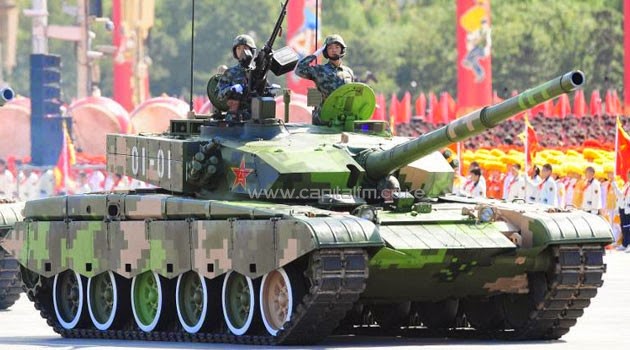
A prime example being India's continued efforts to build Main Battle Tank (MBT) Arjun. As the First and Second Gulf War, IDF-Hezbollah war and other modern conflicts have proved, Main Battle Tank is an out-dated concept. While they were the main thrust tools for Soviet plans through the Fulda gap, in today's low intensity conflict, they are just cumbersome piece of equipment with little tactical advantage. Given that majority of our border is mountainous, a Main battle Tank is useless in any conflict with China or future low intensity warfare in Kashmir like Kargil war. Therefore, wouldn't it better if India instead focused on building low turreted futuristic platforms like the Russian Armata that can be developed to various vehicles evolved to operate in different situations. 


This takes us to another important point, are we spending enough on research in Mountain warfare and High attitude warfare. Simple but very important aspects including cold weather clothing and material research, mountaineering equipment are in some cases still being imported and not produced indigenously. If this is the situation of our preparedness in terms of even basic necessities, we can as well forget about ability to fight futuristic warfare. Take for-example the research by countries on development of Wing-suits for long distance insertion deep inside enemy territory. This is highly relevant for mountainous terrain in the Tibetan plateau. This is just one of many things that we are not looking into. In-fact given that more than America or Russia, mountain warfare is highly relevant to us, we should be at the forefront of developing radical and path breaking weapons. India's defense establishment should not only have long term strategic plan for mountain warfare but also dedicated laboratories for development of radical technologies rather than as in today focusing on irrelevant research such as the discovery of Sanjeevani plant.


The point of building an army for the past is not just the case of the Indian army but also its naval and air forces. Take for examples, the tremendous money being spent on building aircraft carrier groups. Once again aircraft carrier groups are becoming obsolete from their hey-day in world war II and cold war world. Just as Long range Bombers made battleship's irrelevant, access denial strategies involving cruise and ballistic missiles are making today's aircraft carriers nearly impotent. The latest issue of the Economist, calls for development of such fantastic technologies such as Rail guns and directed energy laser weapons if aircraft carriers and other surface ships are to remain relevant in modern battlefield. Given that India's potential conflict will be more likely with China than Pakistan. How would Indian aircraft carries be effective when China has devised ways to counter and neutralize American carrier group dominance. And surely, China would down the road give access to Pakistan to such carrier defeating technology like the recently tested WU-14 which would easily neutralize all our planned aircraft carriers. 


The Economist in the same issue calls for America to develop its third offset technological jump innovations. It asks for America to ditch the expensive human controlled fighter aircraft in favor automated drones. In this context, the entire debate about Rafale and Grippen aircraft is non sequitur. India should rather emphasis on developing low cost stealthy automated drones that can produce rapid and large scale impact. 


Hence it is time, India stopped building a World War II army. Sure the mandarins of the armed forces would rather like to have Big Tanks, Big Ships (aircraft carriers) and Faster Jets. But the defense minister should take holistic view of the future and conserve our limited resources in developing and building the forces required to fight a 2040 war rather than 1940 one. India should follow the leads of China, Russia and America and develop multi utility armor platforms and integrated soldier packs. The focus should be for rapid response, high impact warfare in limited time-scale as modern battle will evolve to that. India air modernization should focus on Drone and anti-drone warfare in the same vein while the naval department should increase its focus on submerged warfare including larger submarine fleet and even autonomous unmanned submarine drones. And not the least, India should remember that tomorrow's battlefield will be five dimensional one rather than a three dimensional like in the past. Cyber and space warfare will be a key component of any attack.  Development of anti-satellite and anti ballistic technology will be key in the latter's case while harnessing Indian IT and technological bench strength to develop cyber capabilities to not only defend our assets but also as a deterrent for future mischief.  

Therefore the minister should think for the future, think out of box taking an outside view rather than being confined to vision of bureaucratic mandarins of the north block.


Saturday, May 16, 2015

What China wants from India?? - Untangling the Liberal narrative


As Prime Minister Narendra Modi embarks on his three day visit to China, the question that needs to be correctly asked is “What does China really WANT from India??” Before we attempt to answer this question, it is important to understand “What China does NOT WANT from India??” This question is critical to untangle the myth perpetuated by Left liberal intelligentsia and “secular” establishment about Chinese intentions about India.  The myth about Indian Chinese friendship, the repeated calls of shared heritage of two ancient civilizations working towards a stable global order while cooperating closely economically, politically and culturally.  This is in-fact a repackaged version of Nehruvian “India China Bhai Bhai” philosophy that led to historic defeat in 1962.  

What China does NOT WANT from India is peaceful and cooperative friendship between two equal partners. Now before our hyperventilating Liberal friends jump and accuse us of war mongering and retort that China is not currently in a war with us. Let me clarify that the operative word here is equal. China is not like the rabid minded Pakistan intent on continuous warfare with us. However China never intends to consider us as an equal partner, anything but that they consider us as infinitely inferior and subservient race.

Yet, why does the left liberal intelligentsia perpetuate the myth of Chinese Indian friendship. They do because there are three different set of people all part of this group who have stake in perpetuating this myth.

The first set is the establishment itself, the ancien regime of political-bureaucratic leviathan that has characterized our governance for the past 65 years. The motive for them to propagate the myth is to cover the huge governance bankruptcy under their establishment. In the decades since Independence, this establishment has fretted away critical years in corruption, nepotism and short sighted policies instead of building strategic capacity. Similar to the typical Delhi attitude of looking at one’s near abode and thinking only of personal advancement and aggrandizement, officials and political masters responsible for Chinese policy have for too long focused on promotions, departmental feuds, ego battles and making money out of everything including toilet seats.  Hence today they have NO CLUE about China. They really don’t know what Chinese think economically, politically or militarily and what their objectives are. Therefore to cover their sheer incompetence they proceed with blustering their way out. As typified by our former foreign minister’s response to Chinese incursions as mere acne on the face. They shout out from all available media that everything is fine and there is nothing amiss and that we need to continue this “exalted” friendship with China.


The second set consists of the “Hippie”, idealistic, utopian, day dreaming crowd of left liberals. This set typified by our usual AAP supporters believe in the global order of Human beings. To them, the world is harmonious collection of people who need to live peacefully with each other by sharing and giving and caring and so on…. Similar to their economic and governance philosophy, their foreign policy is centred on the core belief that every human being is absolutely good at heart and intent on global wellness. Now however wishful this might seem, we know that this is not true when we look at the cold reality of our existence. Just like how organized communes and Mohalla shabhas fail in our real world, so does this Utopian foreign policy. However this left liberal set, who consists the largest among the three sets utilize every channel to call out for peace. To them the ideas of real politick and strategic building of capacity are horrors that disrupt their childish fascination to achieve the cartoonish world of “knob the builder” or “Dora the explorer”. Therefore they will like hugging trees to prevent development will do all that is possible to disrupt anything that can be considered “war like”.


Finally, the third and most dangerous set are the set of people who are completely against the very idea of India. This includes the Maoists, their sympathizers, JNU crowd and other anti-national elements including Medha Patkar, John Dayal and others of the NGO crowd. This set secretly wishes for disruption and destruction of India itself and Balkanization into multiple entities. Their desire is driven by ideological anchorage to Mao China, similar to Kolkattans who celebrated the Chinese advance in 1962. They are actively sponsored and device many devious ways to propagate their goal. And hindering all matters of developing capabilities to counter react to Chinese designs is foremost part of their strategy. Hence they will try to blind us all in to believing Chinese friendship and good intentions and warnings us not to look at gift horse by its mouth.

Given that we have now untangled the web of lies spread by left liberals about what China wants from India. Let us look at what they really WANT from us.  There are two main driving factors to understand this.

One, China wants to dominate the world. This is fact that is now known by most of the global sane population. Here again lets us not be dissuade by false arguments about retard-ness of the above statement as it is foolish for China to engage in World War III.  The fact is that the entire premise China doesn’t want to dominate the world because they don’t want global conflict is again a product of childish thinking. As detailed out in the book “The Hundred year Marathon” by Michael Phillsbury, China wants to achieve dominance in the world by replacing USA as the pre-eminent power of 21st Century. This would entail developing economic, political and military might silently through stealth and mis-interpretation of intent.  China would like to then redesign global institutions and order in a framework of its liking. The principle drive for this is to reverse the humiliation of recent past under western imperialism and hark back to the glorious days of “Heaven’s Mandate”. 
Hence, for them any coupling of India and China is naturally insulting. The whole India China bracketing is unjust and illogical. The truth is that we are nowhere near China economically, politically or militarily, Our 65 years of left liberal establishment has hallowed us from within. They know this and they resent any attempt to equate us with them. Our previous establishment’s attempt to mask in the fake glory of being equal to China definitely instigates it to show the world what our place is.


Secondly, though China understands that India currently is nowhere near matching it. India still has the potential in next 50 years to seriously undermine Chinese order. This is because of the sheer weight of our numbers. Just like in the initial stages of WW2, inferior Russian forces were able to halt superior German forces by their huge and almost infinite size of army and land. India even today can in the next decade develop enough capability to make any Chinese intervention into a costly affair. It is only India and India alone that has in the future the potential to give Chinese a bloody nose if we get our act together.

Therefore, China really doesn’t want India to develop and acquire the potential and the capabilities. China doesn’t want to share its glory equally with India. China has not planned for the next hundred years displacing America to see India hitchhike its hard work to acquire place in the high table. No, China doesn’t want any of this. What they really WANT is for India to remain a third world country. Yes. That is what China really wants of us. Just like USA long neutralized potential competitors like Mexico or Brazil in its neighbourhoods to global lightweights. China would like India to be the same. To be eternally internal focused on domestic squabbles, dealing with myriad problems and never have the institutional and united will to stand up to it. 


Hence if we truly want India to be a superpower, to be counted among the developed nations of the global order, to have our voice matter, then it is time that we got out act right. Let us first get facts straight about true Chinese intentions and let us sort our putrid domestic mess left over by Nehru Gandhian establishment and focus our energy in building economic, political and military capacity.

However let us be aware of the ever existing Left liberal goebbelsian threat against our efforts for we need to cut and discard the cancerous tumour that has affiliated us for so long. 

Sunday, October 12, 2014

Revenge of Geography: What it implies for India’s rise

Recently I read an interesting book on geo-politics "Revenge of Geography"[1][2] by Robert Kaplan. The author explores the impact of Geography in shaping up of the history of the civilized world and tries to draw what implications it will hold in the next century.
The whole premise of the book is that the entire world can be divided Afro-Eurasian Hinterland and an American Island. The geography of the Afro-Eurasian Hinterland plays the decisive role in the development of History of the various political entities in the Hinterland.
The author elaborates how the world can divided into a Eurasian Heartland consisting of the wide stretch of land from the borders of Central Europe in the west to Mongolian steppes and Pacific Ocean in the East. And Rim-land regions surrounding the Heartland and blocking its access to sea. In between the Rim-land and Heartland or between Rim-lands lie shatter or conflict zones which because of geography are perennially unstable and become the ground for invading armies to march over in their attempts at domination. The author considers the American continents as separate Islands with the Northern Island dominated by United States and southern by Brazil and Argentina. 

Accordingly, the major Rim-land powers are Western Atlantic Europe, German dominated Central Europe, Turkish Highland, Iranian plateau, Indian Sub-continent, Southern China. These Rim-land powers are in constant flux/fight with the Heartland power of the Day.

As can be evidenced by History, from the Scythian Tribes that harassed the Greeks, Persians and Indians, Huns who ravaged the Roman and Gupta Empires, Central Asian Turks who brought Islam to Northern Africa and Indian Sub-continent, Mongol armies to nearly conquer the Heartland to finally Russian Empire and Soviet Union to Dominant the world. The history of the Rim-land regions has been significantly impacted by the dominant power of the Heartland.

The author presents historical analysis of the continued struggle for dominance over the Eurasian heartland. It then proceeds with the logical extrapolation on the events that can unfold in the future. The presumptions are based on the analysis of a weaker Russia giving up its hold on Heartland and a rising China taking over its place in the Heartland. China will for the first time in history has the potential to become the first dominant Rim-land power to extend and dominate the Heartland. And Chinese domination with their access to warm seas which was ever denied to Russians may help them to become the dominant world power.

The author also has devoted a chapter on the implications of geography on Indian position in global geo-politics. The book delves into the Indian sub-continent. The Author propagates that India is the “key swing/pivot” state and the side we take can change the geo-political balance of the coming world. The author argues in the book how Northern India was always influenced by Central Asia and thus today has the potential to extend influence in the region countering Chinese influence. Historically North India was defined by its relations with Central Asia with Mauryan, Kushan and Moghul Empire stretching across North India to Central Asia. According to the Author, North Indian geographical contour extends up to Hind Kush Mountains and that Hindu Kush is the true geographical border of the Indian sub-continent. Hence Pakistan is an artificial geographic construct, a shatter zone just like Syria, Iraq or Ukraine. The author foresees further instability in the region, given the artificiality of boundaries of both Afghanistan and Pakistan. Hence it is crucial for India to re-assert its influence in the region if it ever has to become a serious global power.  The ability of India to assert power outside the sub-continent is thus dependent on the success of India’s influence and dominance in Afghanistan and our ability to project power in Central Asia.


Therefore the author argues that we need to prioritize our geo-political focus towards the Afghanistan - Pakistan region to assert over dominance of the same that we had during the times of Mauryan, Kushan and Mughal Empires.


Though, I agree with the author’s analysis that India needs to extend influence in the broader Central Asian Heartland. The author ignores an important aspect of the Indian History. It is the rich maritime history of the sub-continent that is completely forgotten by Western scholars. Ancient India was one of the progressive Maritime civilizations in the world. 

Indus valley Traders have known to trade with Sumerian and Egyptian civilizations. Early accounts of Indian traders doing bulk shipping of Timber, Copper, Ivory, Pearls and other items have been recorded. The world's first dock was established in Lothal in 2400 BCE[3].

This trading continued during the Early Indian Period. Indian traders continued trade with the Romans in the West and Pandyan emissaries were sent to court of Augustus Ceaser[4]. It dominated the trade with East until the rise of Arabs under Islam. Indian culture and Indic religions were exported to Indo-China, Malayan archipelago and even East Asia. Hindu and Buddhist religions passed on over to Thailand, Vietnam, Cambodia, Malaysia, Indonesia, Philippines[5] and China. 


This is an important aspect that today the author totally misses out. The implications by the extrapolation of the geographical argument put forth in the book. That India should re-focus on deeply integrating Trade Ties with Indo-China and South East Asia and Africa's Eastern Sea board. This fact is given more credence by the fact that unlike Central Asia, India has a large diaspora in these countries from Kenya to Singapore. There already exists sufficient Trade between these countries and none of them have antagonistic feelings towards India.

Secondly, India is bound by China and Pakistan to reach Central Asia. New Delhi might be closer to Dushanabe, capital of Tajikistan (1760 Kms) than to Chennai (~2100 KMs). India today could have tapped into the vast markets of Central Asia and in return sourced precious oil, natural gas and minerals. But sadly loss of Pakistan Occupied Kashimir and Chinese occupation of Tibet has bound us completely. Either India needs their cooperation and support or India needs to take more circuitous route through Iran or Russia. Hence even though geography dictates Indian influence in Central Asia, current political realities prevent India from doing so.

However in the case of African East and South East Asia, India doesn’t have any such boundaries. India is the preeminent sea power in Indian Ocean though lately challenged by China. India can still set up road and rail connectivity up to Singapore passing through Myanmar, Thailand and Malaysia[6]. South East Asian countries have like India favourable demographics, developed political institutes and stability and our cultural affinity with large Indian diaspora. These give India, a unique opportunity which needs to be leveraged to the fullest.

The recent growth of Africa also offers India the vital chance to penetrate these markets. Indian companies with cost effective and frugal products have already captured significant share of these markets with Auto-companies leading in the front[7]. Indian experience in development of these products and their suitability of these in similar environments in developing Africa gives it the required expertise to cater to these markets. Also India’s appetite for resources can be met with Africa and unlike Chinese companies; India is far less interfering and domineering. All these make India the natural partners for African Development.

Therefore the book ignores the true potential for India lying in the pivotal position in Indian Ocean acting as the key Trans-shipment Trading point just as Singapore and Dubai are functioning for the Middle East and South East Asia. India needs to develop good railway and road linkages with Eastern and Western coasts along with Industrial corridor that can not only help in Trans-shipment but can process valuable resources from Africa in the Deccan Hinterland and service South East Asian Markets. Therefore developing an East West Industrial Corridors can create the required network allowing Industries to set up along the length helping connect Africa and the East. Therefore Developing Hinterland and providing good connectivity to ports can help India not only develop these areas but help in it becoming the global super power that it historical was.


Therefore Geography dictates that India should look South and use it's long coastline to become the dominant Rim-land nation and global super-power.


[1] http://www.flipkart.com/revenge-geography-english/p/itmdzj9afwan82zn?q=The+Revenge+of+Geography+%28English%29&as=on&as-show=on&otracker=start&as-pos=p_1&pid=9780812982220
[2] (by Robert Kaplan, Random House Publishing Group, 414 Pages, ISBN: 9780812982220, Price Rs.499)
[3] http://en.wikipedia.org/wiki/Indian_maritime_history
[4] http://en.wikipedia.org/wiki/Indo-Roman_trade_and_relations
[5] http://en.wikipedia.org/wiki/Kingdom_of_Butuan
[6] http://en.wikipedia.org/wiki/Trans-Asian_Railway
[7] http://www.business-standard.com/article/companies/bajaj-auto-sixth-among-top-10-motorbike-sellers-in-africa-113102000494_1.html